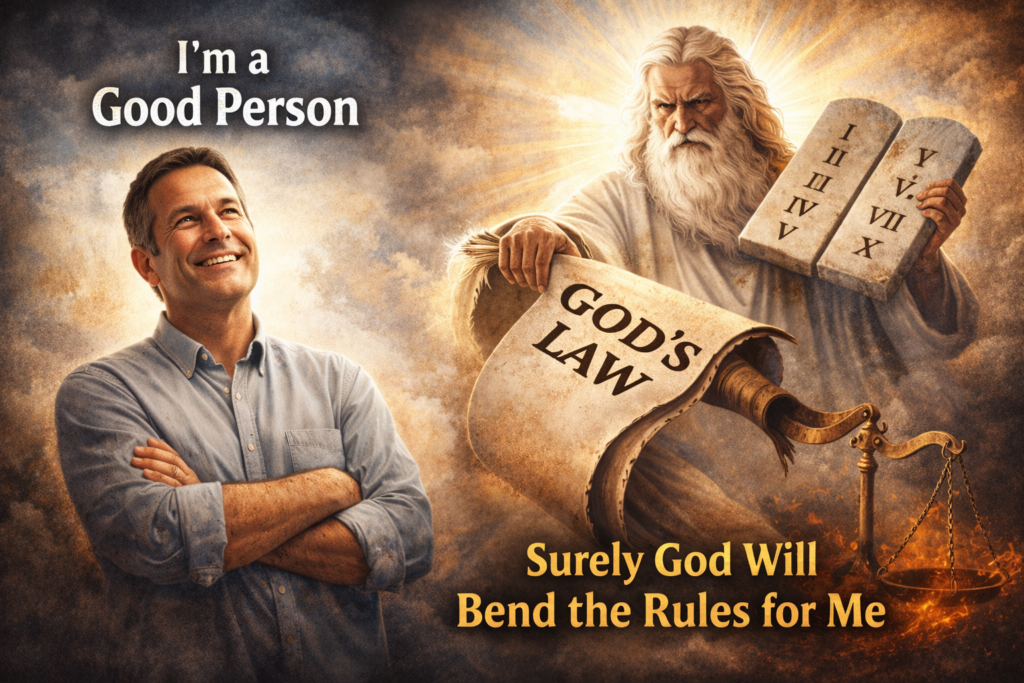
Many people believe that when they stand before God, their good deeds will speak louder than their sins. They reason that while they are not perfect, they have lived decent lives. They have helped others, worked hard, loved their families, and avoided what they consider “serious” wrongdoing. Surely, they think, God will overlook the rest.
This confidence is often summed up in a quiet but firm conclusion: I have kept the rules.
But Scripture does not present heaven as a reward for effort or hell as a punishment reserved only for the worst offenders. The Bible presents God as holy, just, and uncompromising in righteousness—and humanity as accountable, not comparable.
The False Comfort of “Being Good”
The idea that goodness outweighs sin assumes that God judges the way humans do—by comparison. “I’m better than most.” “I’m not like them.” “I tried my best.”
Yet God never measures righteousness by relative goodness. His law is not a curve graded against other people; it is a standard that reflects His own character. One lie does not become righteous because it is surrounded by generosity. One act of rebellion is not erased by years of kindness.
Good deeds are good—but they are not payment.
Justice Cannot Ignore Guilt
If a judge were to dismiss a crime because the criminal had done charitable work, we would call that corruption, not mercy. Justice requires that guilt be addressed, not ignored.
In the same way, God cannot simply overlook sin because a person has done good things. To do so would deny His own justice. This is not because God lacks compassion, but because He is righteous.
This is where many stumble. They want forgiveness without accountability, mercy without repentance, heaven without a Savior.
The Danger of Moral Confidence
Ironically, those who trust in their goodness are often the farthest from salvation—not because they are worse sinners, but because they do not believe they need saving.
Self-righteousness does not appear rebellious; it appears respectable. But it quietly shifts trust away from God and onto self. It says, “I will stand on what I have done.” Scripture repeatedly warns that this confidence is misplaced.
Good works were never meant to justify us before God. They were meant to flow from a heart already made right with Him.
What God Requires Instead
God does not ask whether we have done enough good to cancel out the bad. He asks whether our sin has been dealt with at all.
That is why the gospel does not begin with moral improvement, but with repentance. It does not point us to our record, but to Christ’s cross. Salvation is not awarded to those who tried hardest—it is given to those who trust fully.
Jesus did not die to make good people slightly better. He died to save guilty people completely.
A Better Question
The question that matters is not, “Have I kept the rules?”
It is, “Who has paid for my sin?”
Only one answer satisfies both God’s justice and His mercy. And it is not found in us.